Skip to content


A commercial HVAC system may cool your Springfield, VA, building without a problem all summer and still struggle when the heating season begins. Rooftop units, packaged systems, and heat pumps rely on heating components that may not have operated for months, allowing issues to remain hidden until the first cold morning.
Fall is the right time to check heating operation, airflow, controls, and other components before your building depends on them every day. Keep reading to understand what should be checked, which warning signs matter, and how to prepare your commercial HVAC system before winter arrives.
What Does Commercial HVAC Winter Readiness Actually Involve?
Commercial HVAC winter preparation takes more than changing filters. A technician runs the heating system under normal operating conditions and finds the problems while you still have time to fix them, rather than during the week your building depends on heat every day.
A commercial inspection may include:
- Testing the heating cycle and control sequence
- Inspecting heat exchangers for cracks, damage, or corrosion
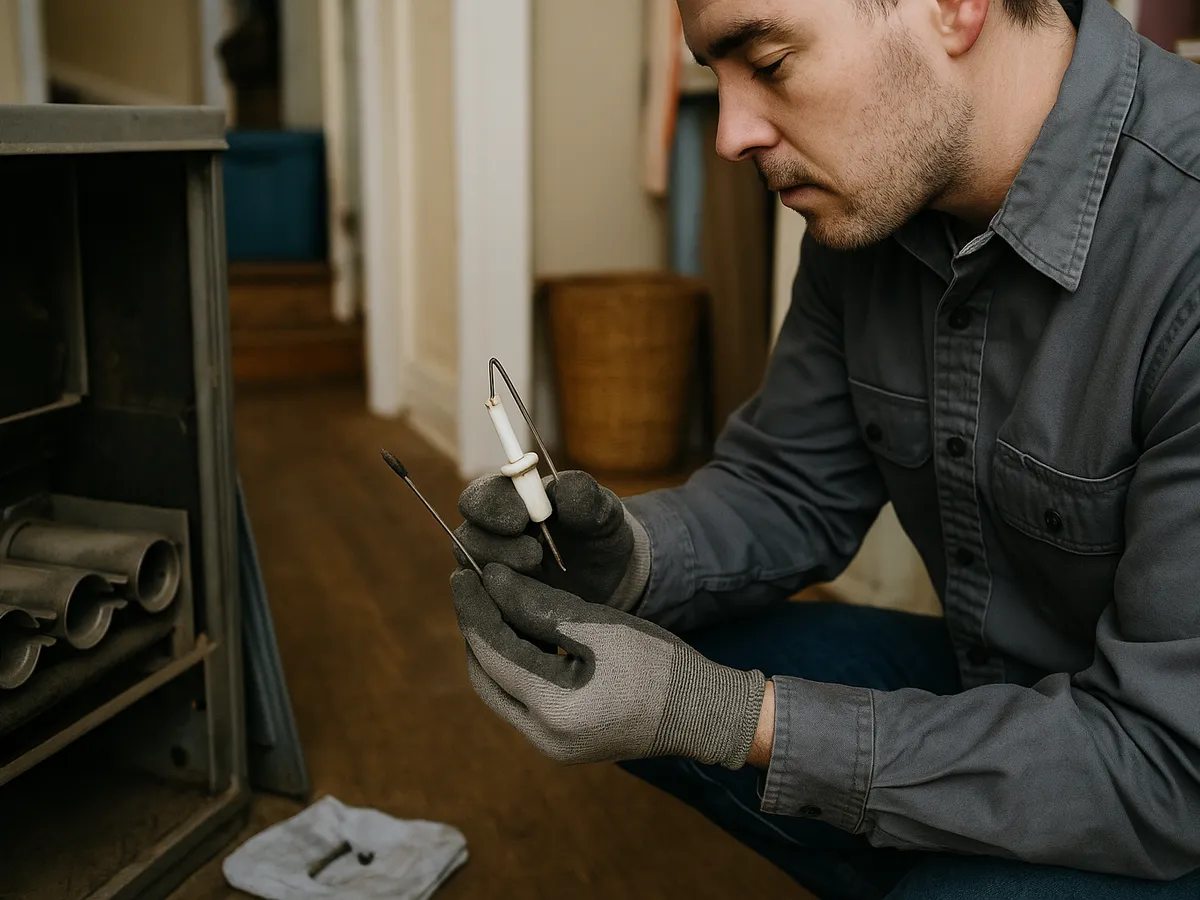
- Checking igniters and flame sensors on gas equipment
- Measuring gas pressure and combustion where applicable
- Inspecting belts, bearings, blowers, and airflow
- Checking economizer dampers and outdoor-air controls
- Inspecting condensate drainage and traps
- Reviewing thermostat and building automation settings
A cracked heat exchanger is the one finding that stops everything. It can allow combustion gases, including carbon monoxide, to reach the airstream, so the unit is shut down rather than repaired and scheduled for replacement. Every building with gas-fired equipment should also have working carbon monoxide detectors, and if anyone smells gas, the building should be evacuated and the gas utility or 911 called from outside.
For Springfield businesses, scheduling commercial HVAC service during the fall provides an opportunity to identify heating problems before they become an emergency during a colder workday.
Which Commercial HVAC Components Should Be Checked Before Winter?
Different components cause different heating problems. A good fall inspection targets the parts that drive ignition, heat production, airflow, ventilation, and system controls, instead of treating every rooftop unit the same way.
Ignition and flame-sensing components
Gas-fired rooftop units depend on reliable ignition and flame sensing. A worn igniter may fail to establish a flame, while a dirty or deteriorated flame sensor may prevent the control system from confirming that the burner is operating properly.
If the unit tries to ignite and then shuts down repeatedly, get that pattern diagnosed before winter demand climbs. Repeated ignition failures leave an otherwise healthy commercial system unable to produce heat exactly when the building needs it.
Belts, bearings, and blower operation
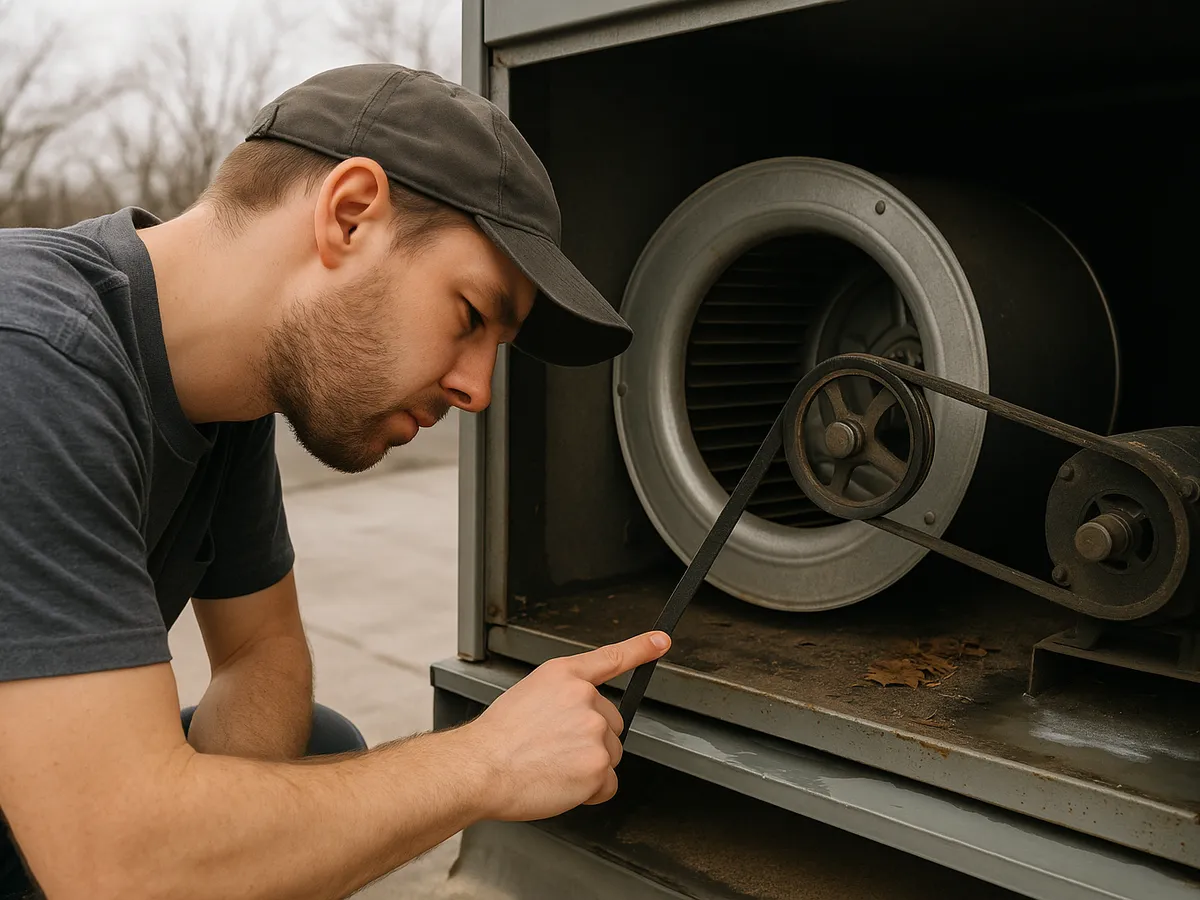
Many commercial rooftop units use belt-driven blower assemblies. A belt that is worn, cracked, loose, or improperly tensioned can slip under load and reduce airflow, while deteriorating bearings can produce unusual noise or vibration.
Airflow matters during heating because weak air movement throws off temperature control and trips safety controls. A technician checks belt condition and blower operation on a scheduled visit, which beats waiting for a belt or bearing to let go during a cold-weather call.
Gas pressure and combustion
Gas-fired commercial equipment needs the correct fuel pressure and combustion conditions to run properly. A technician measures both with diagnostic instruments rather than judging them by how the burner looks.
A combustion check can identify problems involving gas pressure, combustion efficiency, or other conditions that require attention. Because combustion equipment produces exhaust gases including carbon monoxide, these checks belong to a qualified HVAC professional with the right instruments, never to in-house staff.
Economizer and outdoor-air dampers
Economizer dampers and outdoor-air controls affect both ventilation and temperature control. A damper that sticks pulls in more outdoor air than the system was set up to condition, which forces the heating side to work harder to hold your indoor temperature.
During fall service, the technician confirms damper movement and control operation. That matters most on packaged rooftop systems, where the economizer often worked hard through the entire cooling season.
Condensate drainage
Commercial heating equipment produces condensate too, especially high-efficiency units. Drains, traps, and lines need checking for restrictions that block proper drainage once temperatures fall.
Springfield winters bring freezing conditions, so exposed or poorly protected drainage components deserve a close look during fall preparation. Clearing a drain in October costs far less than dealing with water damage in January.
What Can Facility Staff Check Before Calling a Technician?
Your facility staff can handle several basic checks without opening anything that contains gas, combustion, or electrical components. These observations give your technician a head start and sometimes catch an obvious problem before you even book the visit.
Facility staff can check:
- Replace visibly dirty HVAC filters according to the equipment requirements.
- Confirm that heating schedules are correctly programmed.
- Review thermostat or building automation settings.
- Look for leaves and debris around accessible outdoor equipment.
- Listen for unusual belt squealing, rattling, or bearing noise.
- Note equipment that short-cycles or repeatedly fails to reach the setpoint.
- Record any error codes shown by the building control system.
Leave anything involving gas pressure, combustion testing, heat exchangers, electrical components, or internal burner compartments to a qualified commercial HVAC technician.
What Warning Signs Mean a Commercial Unit Needs Repair?
A rooftop unit rarely fails without warning. Changes in sound, cycling, heating performance, or control behavior all point to something that needs attention before winter demand arrives.
| Warning Sign | Possible Issue | Why It Matters |
|---|---|---|
| Burner starts and shuts down | Igniter or flame-sensing problem | Can leave the unit without reliable heat |
| Unusual belt squeal | Worn or loose belt | Can reduce blower performance |
| Rattling or rumbling | Bearing or blower problem | May indicate developing mechanical wear |
| Yellow or abnormal burner flame | Combustion or gas-pressure issue | Requires professional evaluation |
| Repeated high-limit trips | Airflow or overheating problem | Can interrupt heating operation |
| Outdoor-air damper stays open | Economizer/control issue | Can introduce excessive cold outdoor air |
| Repeated control errors | Sensor or control problem | May prevent proper heating sequence |
| Uneven heating | Airflow, controls, or distribution issue | Can leave parts of the building uncomfortable |
A fall inspection isn't about finding something wrong. It's about catching the conditions that threaten reliability and fixing them while your building still runs normally.
Should You Repair or Replace an Aging Rooftop Unit?
Older equipment earns closer attention once it starts needing repairs more often. Age alone doesn't decide repair versus replace, but the condition of the major components and the pattern of failures usually does.
For Springfield commercial properties, the evaluation also weighs what the equipment serves. A rooftop unit covering occupied offices or retail space carries very different stakes than one serving a storage area nobody sits in.
If one unit has already shown heating problems, have it diagnosed before temperatures drop. Working with a heating contractor in Springfield, VA during the fall gives the business more time to decide whether the appropriate response is a repair, component replacement, or longer-term equipment planning.
Should Commercial Rooftop Heat Pumps Be Checked Differently?
Yes. A commercial rooftop heat pump has no combustion components, so the fall inspection covers a different set of parts.
The technician confirms that the reversing valve switches the system between cooling and heating correctly and that the defrost cycle runs as intended. Where the system carries backup or auxiliary heat, that gets tested too, since you'll lean on it during the coldest stretches.
It also helps to know what normal looks like. Steam rising from the outdoor unit and a change in sound during a defrost cycle are expected. Heavy ice that never clears is not, and staff should never chip ice off a coil or pour hot water over it, as both damage the fins and tubing. Report persistent icing instead and let a technician diagnose it.
A heat pump that cooled perfectly all summer can still hide a heating-side fault. Testing it before the building needs continuous heat lets you plan the repair instead of rushing it.
What Should You Ask Before Scheduling Commercial HVAC Service?
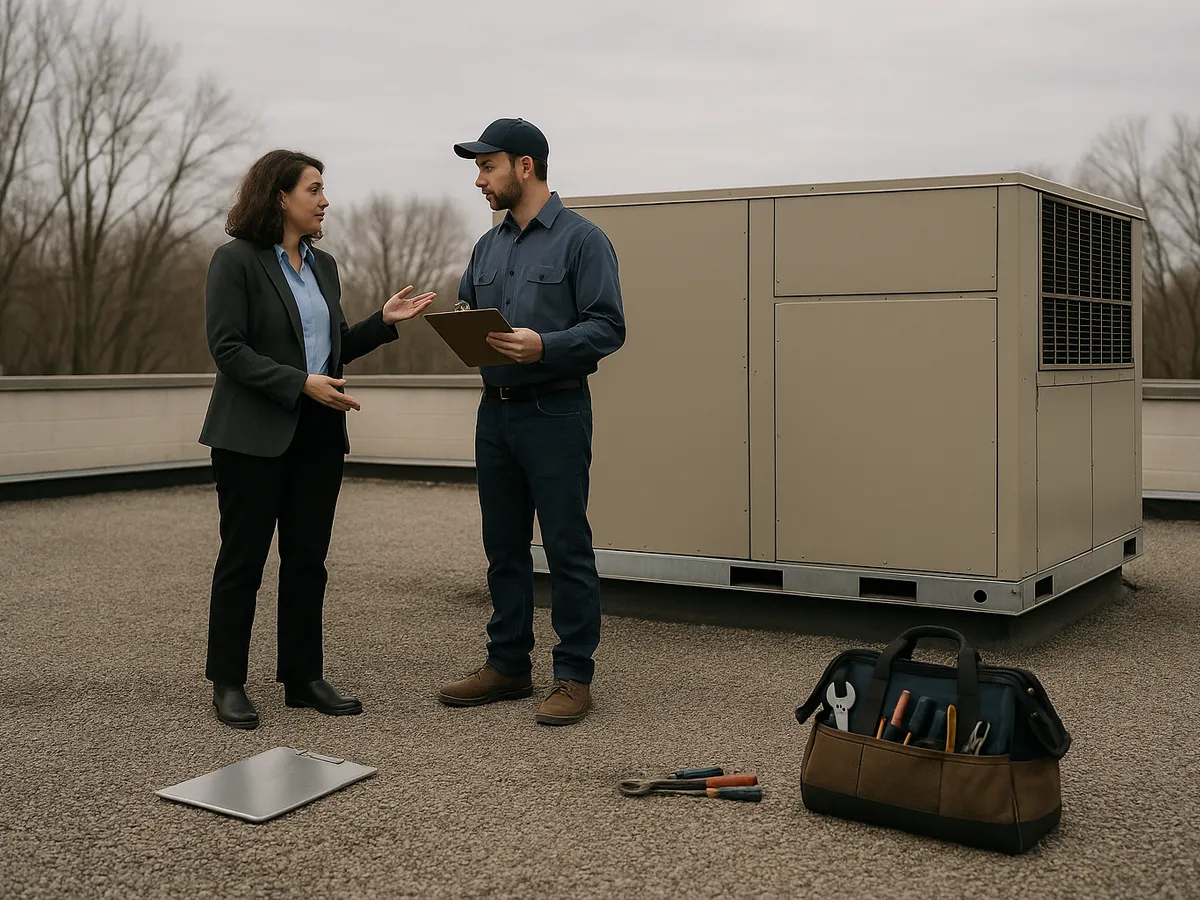
You don't need to diagnose a rooftop unit before you call an HVAC company. A few practical questions will tell you what the fall service actually covers.
Before scheduling service, ask:
- Will you test the heating cycle? A visual inspection alone cannot confirm how the equipment performs under operation.
- Will you inspect the heat exchanger? This is an important component on gas-fired equipment.
- Will you check combustion and gas pressure? Ask whether these measurements are included when applicable.
- Will you inspect belts, blowers, and airflow? Mechanical and airflow problems can affect heating performance.
- Will you check the economizer and controls? Rooftop units rely on these components for proper operation.
- Will you check condensate drainage? Drainage issues can become more troublesome when temperatures fall.
These questions also make service proposals far easier to compare, since two quotes at the same price often cover very different work.
How Can Fall HVAC Service Prevent Winter Disruptions?
Fall preparation buys you lead time. When a technician finds a worn belt, a failing igniter, a control fault, or an airflow restriction in September or October, you have weeks to fix it before a cold morning puts the system under sustained demand.
Waiting for the first heating failure changes everything. Now you're handling uncomfortable occupants, tenant complaints, disrupted operations, and an emergency repair, all on a day you didn't choose.
That is why a scheduled commercial HVAC maintenance plan should be considered part of seasonal building maintenance rather than something reserved only for emergency repairs.
Frequently Asked Questions
When should a commercial HVAC system be checked for winter?
Fall is a practical time to check commercial heating equipment, ideally before consistently cold weather arrives. Scheduling service early provides time to diagnose problems, obtain parts, and complete necessary repairs before the building depends heavily on heating.
What is included in a commercial HVAC winter inspection?
The exact checklist depends on the equipment, but a heating inspection can include the heat exchanger, ignition components, combustion, gas pressure, blower, belts, bearings, controls, economizer dampers, and condensate drainage. Heat pumps require additional attention to reversing and defrost operation.
Can facility staff perform commercial HVAC maintenance?
Facility staff can handle basic tasks such as replacing filters, checking control schedules, clearing accessible debris, and documenting unusual equipment behavior. Gas, combustion, electrical, heat-exchanger, and internal equipment checks should be handled by a qualified commercial HVAC professional.
Why does a commercial HVAC unit work in summer but fail when heating starts?
Cooling operation does not test every heating component. A gas rooftop unit may not use its igniter, flame sensor, burner, or heating controls for months, so a fault can remain unnoticed until the first heating cycle.
Should an older commercial HVAC system be repaired or replaced before winter?
That depends on the equipment's condition, repair history, operating performance, and the cost and scope of the needed work. An older unit with repeated major failures may warrant replacement planning, while a smaller component issue may be appropriate to repair. A fall evaluation provides information before an emergency decision is required.
Why Choose Max HVAC Systems for Commercial HVAC in Springfield, VA?
Preparing commercial HVAC equipment before winter puts you in control of when problems surface and how you handle them. Testing the heating system in the fall uncovers faults that would otherwise stay hidden until the first real cold snap.
At Max HVAC Systems, we evaluate commercial equipment for property owners and facility teams before the season turns. We test how the equipment actually operates, then tell you plainly what needs work and what can wait.
If your commercial HVAC system has not been tested for heating since last season, now is a practical time to schedule service. Call Max HVAC Systems at (571) 462-8820 to discuss your commercial HVAC needs and prepare your equipment for the coming winter.