Skip to content

Buying a home in Springfield, VA often comes with a long list of things to inspect, from the roof and electrical panel to plumbing and appliances. The HVAC system deserves the same attention, especially when the air conditioner or furnace has been in the home for years and you don’t know how well it has been maintained.
Don’t assume an older system needs to be replaced immediately. Instead, find out what equipment you inherited, how old it is, how well it is operating, and whether the ductwork and controls are still supporting it properly. A professional HVAC evaluation before you settle into the house can uncover problems that may otherwise turn into an expensive surprise during Springfield’s summer or winter.
Start With the HVAC System You Inherited
Before deciding whether to repair or replace anything, document what is already in the house. Look at the outdoor condenser, indoor furnace or air handler, thermostat, visible ductwork, and service labels. If you can find the equipment model and serial numbers, keep them with your new-home records because they can help an HVAC technician determine the system’s approximate age and specifications.
A HVAC system that looks old isn’t automatically failing. On the other hand, an aging unit that has received years of deferred maintenance may have several issues that aren’t obvious during a quick walkthrough.
Check These First
- Outdoor unit: Look for visible corrosion, damaged panels, bent coil fins, or excessive debris around the condenser.
- Indoor equipment: Check the furnace or air handler for obvious rust, water staining, or unusual noise during operation.
- Thermostat: Confirm that heating and cooling respond correctly to the temperature setting.
- Airflow: Walk through the house and note rooms with noticeably weak supply airflow.
- Ductwork: Look for disconnected, damaged, poorly insulated, or visibly leaking ducts where accessible.
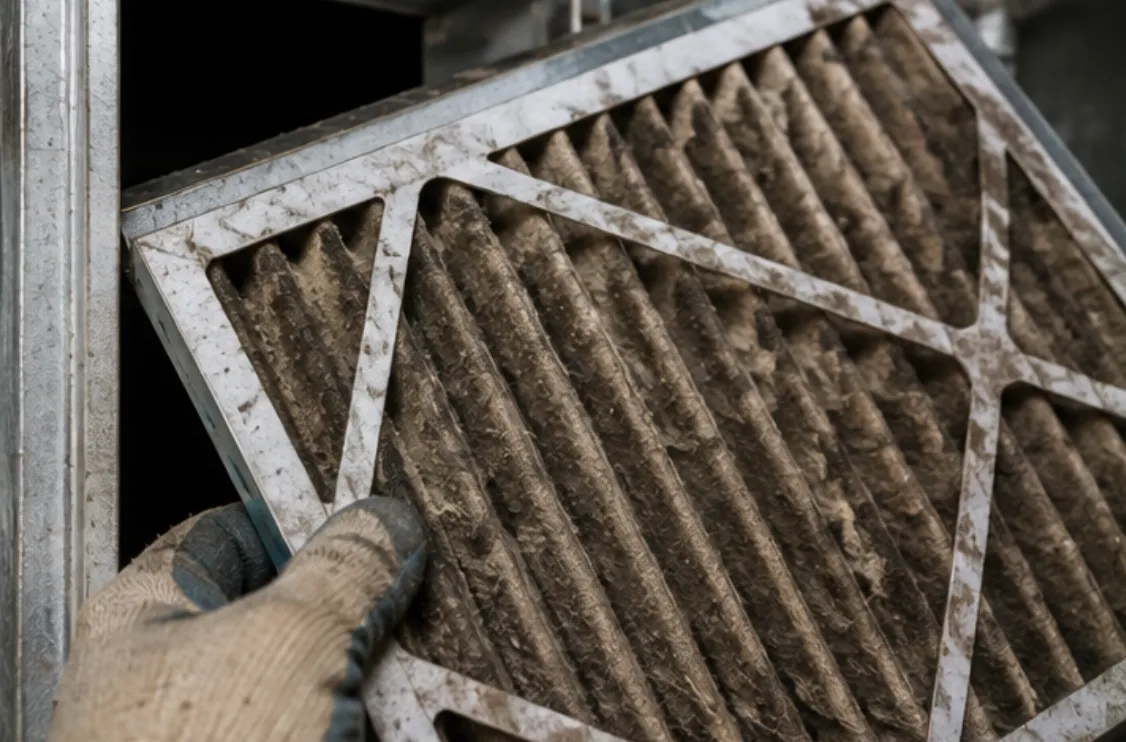
- Filter: Find the filter location and check its condition before assuming the previous owner maintained it regularly.
- Condensate area: Look for water around the indoor equipment or drain line that could indicate a drainage problem.
Springfield’s housing stock includes older homes as well as newer construction, so the condition and configuration of an inherited HVAC system can vary considerably from one property to another. That makes a physical evaluation more useful than judging the system by age alone.
Find Out How Old the AC and Heating Equipment Really Is
Equipment age should be one of the first things you establish after buying the house. A central air conditioner that is around 10–15 years old deserves closer attention, particularly if you don’t have reliable maintenance records or the previous owner mentions repeated repairs. A furnace or heat pump should also be evaluated based on its age, condition, operating history, and availability of compatible replacement parts.
Don’t rely solely on the seller’s description. The model and serial numbers on the equipment can help identify the system and its manufacturing information. An HVAC technician can also inspect the equipment’s condition and explain whether its age is actually creating a concern.
| What You Find | What It May Mean |
|---|---|
| Older system, good condition, little repair history | Continue maintenance and monitor performance |
| Older system with recurring repairs | Compare repair costs with replacement |
| Poor airflow despite equipment running | Investigate ductwork and distribution |
| Frequent cycling or long runtimes | Check sizing, airflow, controls, and equipment |
| Water around indoor unit | Inspect condensate drainage and cooling components |
| No maintenance records | Schedule a professional evaluation |
The goal isn’t to replace equipment simply because it has reached a certain birthday. It is to understand how much useful life remains and what condition the entire system is in.
This distinction can save a new homeowner from making two expensive mistakes: replacing a perfectly serviceable system unnecessarily or assuming an unreliable system will make it through another cooling or heating season without trouble.
Test the HVAC System Before You Need It
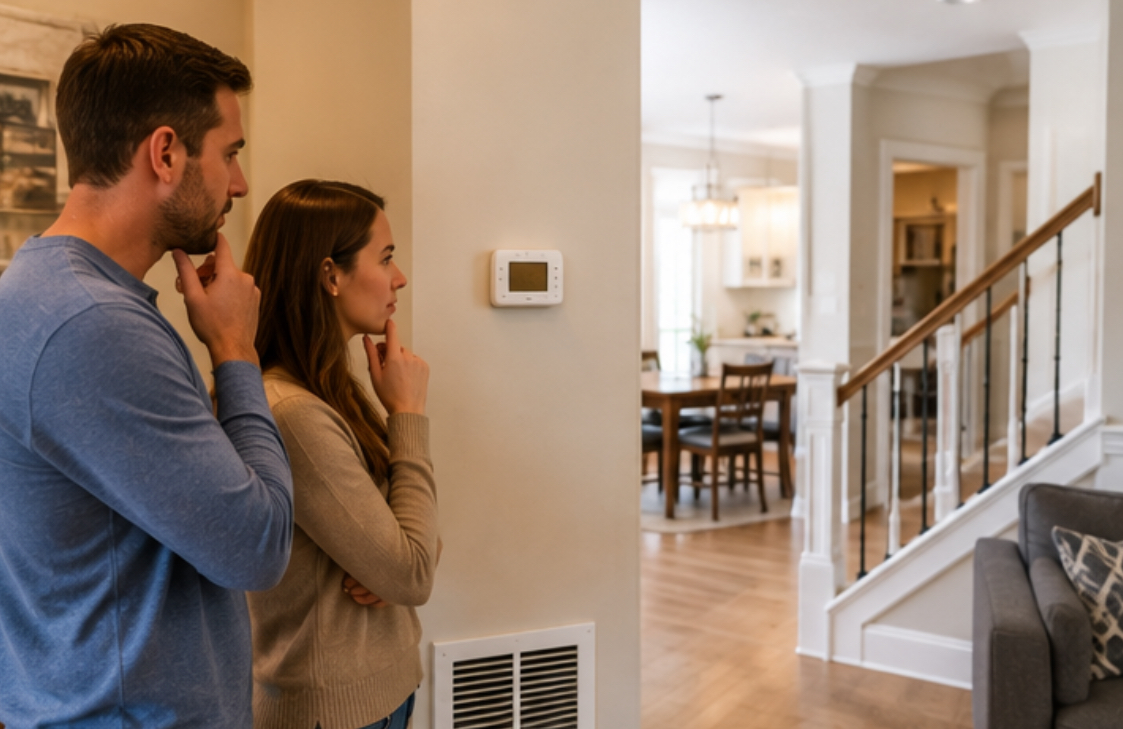
One of the worst times to discover a problem with your inherited HVAC system is during the first major heat wave or cold spell after moving in. Test both heating and cooling when conditions allow, and pay attention to how the system behaves rather than simply checking whether the thermostat changes the temperature.
During cooling operation, notice whether the system reaches the thermostat setting, whether some rooms remain warmer, and whether the equipment runs for unusually long periods. During heating, look for similar issues with temperature consistency, airflow, and cycling.
Pay Attention to These Warning Signs
- Uneven temperatures: One bedroom or level is consistently warmer or colder than the rest of the house.
- Weak airflow: Certain registers deliver noticeably less air than others.
- Short cycling: The system repeatedly starts and stops instead of completing normal operating cycles.
- Unusually long runtimes: The equipment runs for extended periods without bringing the home to the desired temperature.
- Unusual sounds: Grinding, rattling, squealing, buzzing, or repeated clicking can indicate mechanical or electrical problems.
- Moisture problems: Water around the indoor unit, drain pan, or condensate line should not be ignored.
- Poor humidity control: The home feels excessively damp even when the AC is running.
These symptoms don’t automatically mean the HVAC equipment is failing. For example, uneven temperatures can originate from ductwork, return-air limitations, insulation, or the home’s layout rather than the air conditioner itself. A whole-system assessment can help separate an equipment problem from a distribution or building-envelope problem.
Have the HVAC System Professionally Evaluated Before Making a Major Decision
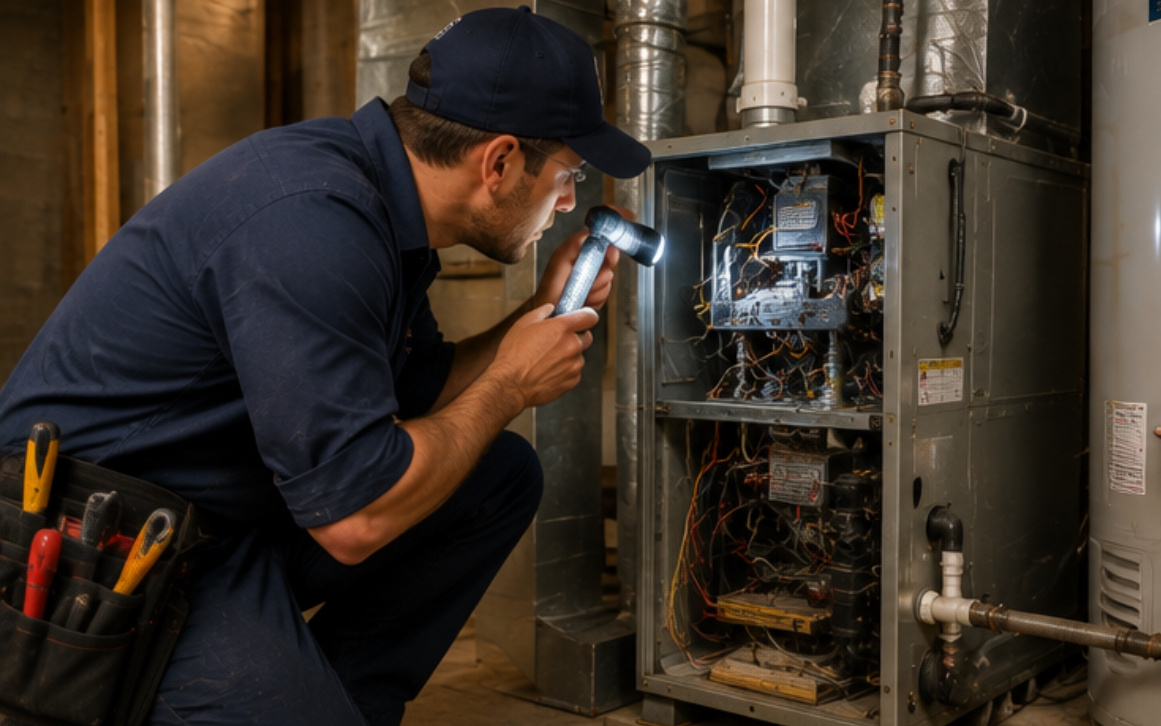
Once you know the equipment’s approximate age and have observed how it operates, schedule a professional HVAC evaluation. This is especially valuable when you have just purchased the home because you may not know what repairs were performed previously, whether the system was properly sized, or whether the ductwork has hidden problems.
A proper evaluation should look beyond whether the AC or furnace turns on. The technician should assess the equipment’s condition, airflow, ductwork, controls, electrical components, condensate drainage, and other system-specific conditions. If replacement is being considered, the home’s current cooling or heating requirements should also be part of the discussion.
For example, replacing an old 3-ton AC with another 3-ton unit simply because that is what the previous homeowner had may not be the correct approach. Changes to windows, insulation, additions, renovations, or ductwork can change the home’s heating and cooling requirements over time.
That is why a new homeowner should ask for an evaluation before choosing equipment, not after the replacement has already been quoted. It gives you a clearer picture of what you inherited and whether the smartest next step is maintenance, repair, targeted system improvements, or complete HVAC replacement.
Get a Professional HVAC Evaluation Before Deciding What to Replace
Once you’ve lived with the home for a little while, you may notice problems that weren’t obvious during the purchase process. A bedroom that stays warmer, an AC that runs for hours, weak airflow from certain registers, or a furnace that struggles to maintain the thermostat setting can all point to issues that deserve investigation.
A professional evaluation should establish the condition of the equipment and the rest of the system. Ask the technician to check:
- Equipment condition: Major components, electrical connections, coils, motors, and signs of wear.
- Airflow: Whether supply and return air are adequate throughout the home.
- Ductwork: Leaks, damaged sections, insulation problems, and restrictions where accessible.
- Controls: Thermostat operation and compatibility with the existing system.
- Drainage: Condensate drain and pan condition on cooling equipment.
- System history: Available maintenance records, previous repairs, and recurring problems.
The goal is to leave the evaluation knowing whether your HVAC system needs maintenance, a specific repair, improvements to airflow or controls, or complete replacement. That information is much more valuable than simply being told that the equipment is “old.”
Know When Replacing the Old System Makes More Sense
An aging HVAC system does not automatically need to be replaced, but replacement becomes more reasonable when age is combined with repeated breakdowns, declining performance, expensive repairs, or difficulty maintaining comfortable temperatures. If a system is approaching the end of its useful service life and a major component fails, compare the repair cost and expected remaining life against the cost of installing new equipment.
A new system can also provide an opportunity to correct problems inherited with the house. Instead of replacing an old AC with another unit of the same capacity, the contractor can evaluate whether the home’s current cooling load, ductwork, insulation, and comfort requirements call for a different approach.
Consider Replacement When You Find:
- Repeated repairs: Several significant repairs within a short period can indicate declining reliability.
- Persistent comfort problems: The system runs but cannot maintain consistent temperatures between rooms or floors.
- Major component failure: A costly compressor, heat exchanger, or other major repair changes the repair-versus-replace calculation.
- Poor overall condition: Corrosion, damaged components, and neglected maintenance can make continued operation less predictable.
- End-of-life equipment: An older system with multiple developing problems deserves a replacement comparison before another large repair is approved.
If replacement is the right decision, don’t simply inherit the previous owner’s HVAC setup. A new installation should be selected around the current home, including any renovations, additions, insulation improvements, or changes in how the space is used.
Consider a New Lennox HVAC System When Replacement Is Due
If your inherited HVAC system has reached the point where replacement makes more sense than continued repairs, a new Lennox HVAC system is one option worth evaluating. Modern equipment can provide updated controls, improved efficiency, and a better opportunity to match the system to the home’s actual heating and cooling requirements.
For a homeowner replacing an old system, Lennox can be particularly worth discussing when you’re looking for:
- Modern efficiency: Newer equipment can offer higher efficiency than many aging systems.
- Better controls: Compatible smart thermostats and advanced controls can provide more precise management.
- System matching: The indoor and outdoor components can be selected as a complete system rather than inherited from a previous installation.
- Replacement planning: A new installation gives the contractor an opportunity to address airflow, ductwork, zoning, and comfort concerns at the same time.
- Manufacturer support: Working with an authorized dealer can provide access to manufacturer-backed equipment and installation resources.
For Springfield homeowners replacing an aging system, working with an authorized Lennox dealer can provide an added layer of confidence during equipment selection and installation. A local authorized dealer can help match the Lennox system to your home’s heating and cooling requirements, explain available equipment and controls, and handle the installation according to manufacturer requirements.
Why Choose Max HVAC Systems for Your New-Home HVAC Evaluation?
Buying a home with an aging HVAC system leaves you with an important decision: keep maintaining what you inherited or invest in a system better suited to the home’s current needs. Max HVAC Systems approaches that decision with a full-system assessment, giving Springfield homeowners a chance to understand the equipment, airflow, comfort issues, and replacement options before committing to major work.
With 30+ years of experience, NATE- and EPA 608-certified technicians, Springfield roots, and Lennox Premier Dealer status, Max can handle the next step whether the evaluation points toward repair, maintenance, or replacement. The company provides AC installation and replacement, heating, heat pumps, ductless systems, zoning, and indoor air quality services.
If the inherited system is beyond its practical service life, we can also help you evaluate a new Lennox system and other equipment options based on the home’s requirements. The goal is simple: understand what you inherited first, then make the replacement decision with the facts in front of you.